Canine Submissive Urination and Calmer Greeting Training
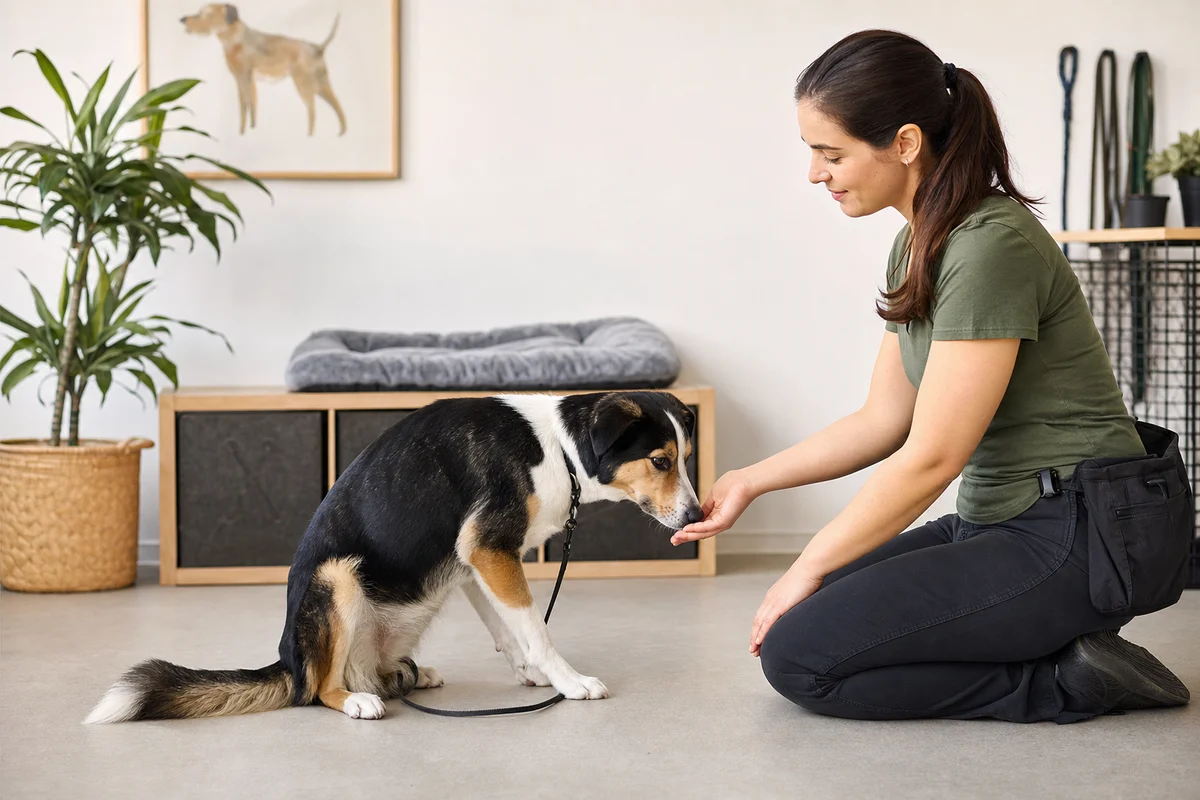
What canine submissive urination looks like in real life
Canine submissive urination is an involuntary urine release that happens when a dog feels social pressure, excitement, or uncertainty. It is not stubbornness, and it is not the same thing as poor house training. In most cases, the dog is reacting to a moment that feels bigger than its bladder control.
The classic sequence usually shows up in the same order: lowered body, tucked tail, averted eyes, ears back, lip licking, then rolling onto a side or back. The urine release often happens during a greeting, a reach for the collar, or another moment of handling. Puppies and adolescents show it most often, but it also shows up in adult dogs with a sensitive temperament or a history of rough, overly intense greetings. For a clearer read on the posture changes, translating body language is a useful companion topic.
Why dogs pee when excited or overwhelmed
The biggest causes fall into three buckets. First is direct social pressure, like a person leaning over the dog or holding steady eye contact. Second is high arousal during greetings. Third is low confidence or fear that can build after past handling, unpredictable corrections, or too much intensity around people. Many dogs show the first two at the same time.
Real-world triggers are easy to spot once you know what to watch for: front-door arrivals, visitors crouching over the dog, excited voices, fast petting, release from the crate, and interruptions during play. Punishment, hovering, and repeated attempts to make the dog greet people again usually backfire, because they raise arousal and reduce bladder control at the same time. When the dog also avoids contact or shrinks away, how do i help my shy or fearful pup is the better match.
Dog pees when excited versus fear-based urination
The excited version usually shows up during happy, high-energy greetings, while the fear-based version shows more appeasement and avoidance. Excited urination often comes with bouncing, wiggles, and forward movement, while fear-based urination is more likely to include crouching, freezing, a tucked tail, and a rolled-away posture. Both can overlap, so we have to read the full context, not just the puddle.
| Excited urination | Fear-based urination |
|---|---|
| Wiggly body, quick approach, loose mouth | Crouched body, stillness, ears pinned back |
| Often starts at the door or during play | Often starts when a person looms, reaches, or scolds |
| Tail may wag low and fast | Tail is usually tucked tightly or held still |
| Dog wants contact but cannot settle | Dog wants space and may try to turn away |
That contrast helps us avoid the wrong response. If the dog is excited, we lower the arousal. If the dog is fearful, we lower the pressure and build trust.
When submissive peeing in dogs is not just behavior
Before we label submissive peeing in dogs as behavioral, we need to rule out medical look-alikes. Common ones include a urinary tract infection, bladder inflammation, spay-related leakage, diabetes, kidney disease, and pain. Sudden adult onset, urination during sleep, blood, straining, a strong odor, increased thirst, or multiple tiny accidents in one day are all red flags.
The practical rule is simple. If it only happens around greetings or pressure and the dog is normal the rest of the day, behavior is more likely. If the pattern is broad, new, or happening in relaxed moments, a vet check comes first.
What a vet should check before you assume it is behavioral
The first test set is a physical exam and urinalysis, followed by bloodwork or imaging if symptoms persist. Bring a short log that notes timing, trigger, amount, and whether the dog was sleeping, greeting, or being handled. One normal exam does not erase the need to address the behavior pattern if the triggering context stays the same.
What to do the moment your dog starts to pee
The best response is calm, quick, and boring. Stop the pressure, turn the greeting down, and clean the spot without drama. In the moment, small changes make a big difference.
- Stand sideways, avoid leaning over, and use a quiet voice.
- Give 30 to 60 seconds of quiet before any attention or petting.
- Clean the area without scolding, laughing, or calling the dog back to the scene.
Those last mistakes matter because they make the dog think the moment is still active. Rushing in to comfort, repeated calling, or another round of excited talk can keep the arousal loop going and make the next episode more likely.
Training changes that reduce puppy submissive urination
Training works best when it lowers pressure before the dog tips over the edge. A good plan starts with calm at a distance, then rewards a sit or mat touch, and only lets the dog approach after the body loosens. For puppy submissive urination, that slow setup is often more effective than trying to correct the behavior in the moment.
Short practice sessions with one guest at a time are better than crowded greetings, because crowded greetings are the fastest way to reset progress. Small increments of distance help too, especially when we want the puppy to succeed three, four, or five times in a row before we move closer. For brand-new homes, new puppy planning tips can make this easier before the first wave of visitors arrives.
The first skills that matter most
The four skills that pay off fastest are settle on a mat, loose-leash approach, hand target, and a calm sit for greetings. Teach the sit command before expecting a dog to hold still around visitors, because a reliable sit gives the handler something concrete to reward. Start several feet away from guests and only close the gap when the dog stays relaxed for multiple repetitions. Sensitive puppies may need a slower pace than confident dogs, so the plan should fit the dog, not force one timeline. If greetings are the main trigger, jumping up and settling down is a helpful next step.
When canine submissive urination needs extra help
If the pattern shows up more than once a week, spreads beyond greetings, or keeps happening after two weeks of calmer practice, it is time to step up the plan. Dogs that recover within a minute or two usually need better management and repetition. Dogs that stay crouched, hide, or leak when someone approaches need help with pressure reduction and confidence building.
When the issue is tied to fear rather than excitement, a focused plan is usually the fastest path forward. For more on the body cues that point in that direction, how do i help my shy or fearful pup is a useful companion article.
Common questions about submissive peeing in dogs
Is canine submissive urination the same as house soiling?
No. House soiling is random, while canine submissive urination usually shows up within 30 to 60 seconds of greetings, handling, or excitement.
How do I tell submissive peeing in dogs from a urinary tract issue?
Look for pain, blood, sleep accidents, frequent tiny leaks, extra thirst, or straining. If those are present, get a vet check first. When the pattern only happens during greetings or pressure and the rest of the day is normal, the behavior pattern is the main suspect.
Can puppy submissive urination be outgrown?
Yes. Many puppies outgrow it as confidence builds, especially when greetings stay calm and brief. The best results usually come from several weeks of low-arousal practice, not correction after the accident.
What greeting habits make dog pees when excited worse?
Leaning over the dog, loud voices, fast petting, direct eye contact, and door chaos all raise arousal. Turn sideways, wait for four paws on the floor, then reward a sit or stand.
A calmer greeting routine starts with repetition
When a dog pees when excited, the fix is usually less drama, more structure, and better timing. If you want help building a calmer routine at home, contact Its a Dogs World K-9 Academy to talk through the next steps for your dog in Glendora or West Covina.