How Long Should I Wait to Take My Dog Out After Eating?
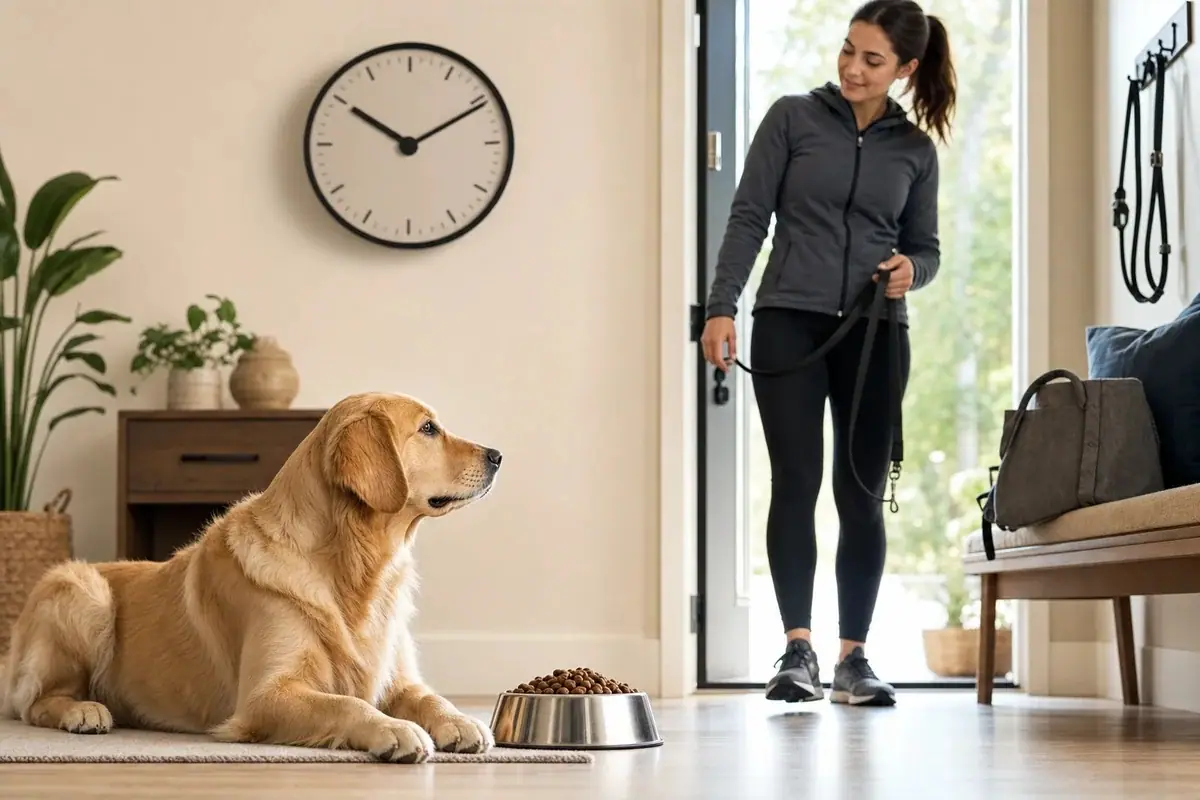
How long after eating can I take my dog out?
For many healthy adult dogs, a calm potty break is usually fine about 5 to 15 minutes after a normal meal, but a real walk or play session is better left for 30 to 60 minutes later. That difference matters because a leash potty trip is not the same thing as exercise, even if both happen outside.
If your dog only needs to relieve itself, keep the outing short and quiet. Meal size, body shape, and eating speed all change the timing, so a fast eater or a deep-chested dog often needs more patience than a slow, smaller dog. If leash manners are still a work in progress, leash training 101 can help make those short outings calmer.
When can I walk my dog after eating?
For many dogs, the practical baseline is 30 to 60 minutes after a standard meal. If the dog ate quickly, had a large portion, or tends to gulp water, 60 to 90 minutes is the safer window before brisk activity.
The point of waiting is simple, it lowers the chance of vomiting, stomach upset, and, in deep-chested breeds, a rare but serious condition called bloat or gastric dilatation-volvulus. That is why many owners separate a calm bathroom trip from anything that looks like exercise, even on a leash.
For a normal potty break, when should a dog go outside after a meal?
A quick bathroom trip is usually fine sooner than exercise, especially if the dog only needs to go. Keep it to 3 to 5 minutes outside on leash, with no running, fetch, or rough play. If you are still building a house-training routine, potty train in 5 easy steps pairs well with a predictable post-meal schedule.
When should you wait longer before a post-meal walk?
Wait 60 to 90 minutes after a large meal, fast eating, or a dog that gulps water. Zoomies, rough play, and stairs make the wait longer than a simple leash potty break because they add motion and pressure.
What changes the wait time before you let a dog outside after meals?
The three biggest timing factors are meal size and eating speed first, body type or breed second, and the type of outing third. Puppies often need more frequent bathroom trips, but that does not mean they should run or play right after eating.
Sensitive stomachs, reflux, and a history of vomiting are all reasons to keep the post-meal routine calmer and longer. A predictable rest spot can help, and crate training 101 is useful if your dog already sees the crate as a place to settle rather than a punishment.
Puppies and senior dogs need a different rhythm
Puppies may need a potty break within 5 to 10 minutes after eating, but the outing should stay quiet and on leash. Senior dogs often need a slower pace and a shorter outing because digestion and joints are both less forgiving.
Large, deep-chested, and fast-eating dogs need the longest wait
Deep-chested breeds and dogs that inhale food are the ones to wait the longest, often 60 to 90 minutes before exercise. If your dog finishes in under 2 minutes and gets overly excited after eating, a slow feeder or split meals can make the routine easier.
A simple after-meal routine that works at home
The best routine is predictable: mealtime, quiet downtime, then the right kind of outing. A steady house-training rhythm usually works better than improvising every day, and one helpful reference is potty train in 5 easy steps if you are still shaping the basics.
Keep breakfast and dinner on the same basic schedule so the dog learns what comes next. The goal is not to make every meal rigid, it is to make the next choice easy, short potty break first, easy walk later, and no pressure to do both at once.
Step 1: Give the house 5 to 10 minutes of quiet
No tug, fetch, wrestling, or stair sprinting right after the bowl is empty. Let the dog settle before you decide whether the next trip outside is a bathroom break or a walk.
Step 2: Choose a potty break or a real walk
If the dog only needs to go out, a calm leash trip after 5 to 15 minutes is usually fine. If you want a walk, wait 30 to 60 minutes and keep the pace easy rather than turning it into exercise.
What not to do right after your dog eats
Skip running, fetch, rough play, dog-park style zooming, and hard stair climbing for at least 30 to 60 minutes. A calm leash potty break is the only outing that usually makes sense immediately after a meal, and even then it should stay brief.
Chugging water plus hard exercise can add stomach stress for some dogs, especially the ones that already eat fast.
Safe leash potty breaks vs high-energy play
Safe means 3 to 5 minutes on leash with slow sniffing and a quick return indoors. Unsafe means sprinting, wrestling, chasing balls, jumping into the car for a long outing, or hard stair climbing.
When waiting longer is the safer choice
Some dogs need a much slower post-meal routine, especially deep-chested dogs and dogs with a past bloat episode. If the belly looks swollen, the dog starts pacing, or there is repeated unproductive retching, stop waiting and treat it as urgent.
Dogs with a history of vomiting or stomach trouble often do better when the after-meal plan is extra calm and consistent. If that pattern shows up often, ask your veterinarian about the medical side and keep the home routine simple and predictable.
Signs that mean your dog should be checked now
Repeated retching with no vomit, a swollen abdomen, or collapse means emergency vet care. If your dog cannot settle within 10 to 15 minutes and keeps pacing, treat it as urgent instead of waiting to see if it passes.
Questions dog owners ask before the next leash clip
Here are the short answers we give most often. Each one starts with the direct response and then adds the number or rule that matters most, so you can decide what to do next without guessing.
Can I take my dog out right after eating for a potty break?
Yes, a short leash potty break is usually fine within 5 to 15 minutes after a normal meal. Keep it calm and brief, not a walk, run, or play session.
How long should I wait before walking my dog after eating?
Wait 30 to 60 minutes for a normal walk, and 60 to 90 minutes after a big meal or for deeper-chested dogs. Keep the pace easy, not a jog.
Do puppies need a different wait time after meals?
Yes, puppies usually need more frequent potty breaks, but exercise should still wait about 30 minutes after eating. Many puppies can go out soon after meals if the trip stays short, quiet, and on leash.
What signs mean I should call a vet instead of waiting?
A swollen belly, repeated unproductive retching, drooling, or sudden weakness means do not wait. If your dog cannot settle or starts collapsing, get emergency help now.
Make the next meal calmer than the last one
Most dogs do best with a simple rule, calm potty break first, full walk later, and no hard play right after eating. If you want help building a steadier routine at home, start with small, repeatable steps that match your dog’s energy level and meal schedule.
Contact Its a Dogs World K-9 Academy to talk through a plan that fits your dog’s temperament, your schedule, and the pace that keeps meals, walks, and bathroom breaks working smoothly at home.